Discover Delhi: 10 Best place in Delhi India’s Captivating Capital
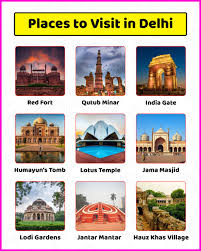
Use our in-depth guide to discover Delhi’s top attractions. Find out what makes India’s capital a must-see destination — from colorful markets to historic landmarks — and explore the best place in Delhi for your next visit.
India’s capital, Delhi, is a city where modern urban energy and centuries-old history coexist harmoniously. Delhi, one of the oldest cities in the world still inhabited, provides visitors with an amazing trip through history, culture, and time. Delhi has amazing things to offer everyone, whether they are history buffs, foodies, spiritual seekers, or adventure seekers.
In this in-depth guide, we’ll examine the top ten locations that demonstrate why Delhi is still one of the world’s most popular tourist destinations, drawing millions of visitors each year who come to enjoy its distinct beauty and enduring appeal.
1. The Red Fort (Lal Qila) – Symbol of Mughal Grandeur
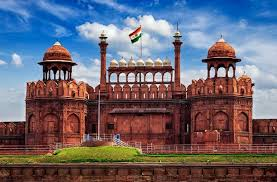
The magnificent Red Fort stands as an enduring symbol of India’s rich Mughal heritage and the nation’s independence. Constructed by Emperor Shah Jahan in 1648 as the residence of the Mughal royal family, this UNESCO World Heritage Site is a masterpiece of Indo-Islamic architecture that commands attention with its imposing red sandstone walls stretching over two kilometers.
Visitors are taken back in time to a time of unmatched royal grandeur when they enter the Lahori Gate. The Diwan-i-Aam (Hall of Public Audience), where the emperor would address regular people, and the magnificent Diwan-i-Khas (Hall of Private Audience), which formerly held the fabled Peacock Throne encrusted with priceless gems, are two of the fort complex’s architectural treasures.
The prime minister of India raises the flag and speaks to the country from the fort’s walls on Independence Day, giving it particular national significance. Don’t miss the evening light and sound display, which vividly tells the stories of emperors, conflicts, and glory throughout the fort’s 400-year history.
The best months to go are October through March. Admission costs ₹35 for Indians and ₹550 for foreigners.
2. Qutub Minar – An Architectural Marvel
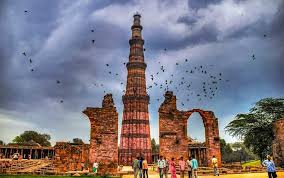
The Qutub Minar, a testimony to Delhi’s old Islamic architecture, stands proudly at 73 meters, making it the tallest brick minaret in the world. This UNESCO World Heritage Site was constructed in 1193 by Qutb-ud-din Aibak, the first Muslim monarch of Delhi. It has five separate storeys, each distinguished by a projecting balcony with elaborate carvings and Quranic inscriptions embellishing the red sandstone and marble surface..
One feature of the Qutub complex is the tall minaret. It is home to several historically significant structures, including the mysterious Iron Pillar, a metallurgical wonder that has stood for more than 1,600 years without rusting, and the Quwwat-ul-Islam Mosque, one of the oldest mosques in India.
With its red sandstone construction adorned with white marble, the Alai Darwaza, an elaborate gateway constructed in 1311, is the best example of Indo-Islamic architecture. Particularly around sunrise and dusk, the complex’s serene gardens offer the perfect backdrop for both history buffs and photographers.
Expert advice: Go early in the morning to escape the crowds and take beautiful pictures in the gentle light of the day.
3. Humayun’s Tomb – The Taj Mahal’s Predecessor
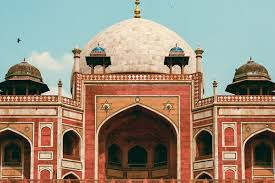
The Mughal Emperor Humayun’s widow commissioned Humayun’s Tomb in 1565, marking a turning point in Mughal architecture. The famous Taj Mahal, which was constructed almost a century later, was directly influenced by the Persian-style Charbagh (four-quadrant garden), which was brought to India by this UNESCO World Heritage Site.
Built of white marble and red sandstone, the tomb’s double-domed edifice stands majestically in the middle of vast Persian gardens that are separated by pathways and water channels. The geometric designs, elaborate marble inlay work, and symmetrical architecture all showcase the Mughal era’s architectural mastery.
In addition to the main tomb, the complex has more than 150 other burials, including that of Humayun’s barber Isa Khan Niyazi and a number of other members of the Mughal royal family. After much archeological study, the gardens were recently restored to display the original 16th-century plan, complete with fruit trees, seasonal flowers, and classic Mughal landscaping.
During the golden hours, when gentle sunshine casts warm hues on the red sandstone, the monument becomes a photographer’s dream come true. Many tourists spend hours perusing this enormous complex’s minute detailing, serene gardens, and lesser-known buildings.
4. India Gate – The Nation’s War Memorial
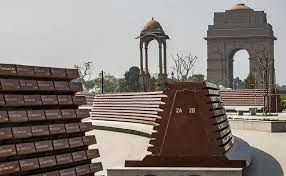
India Gate is a somber and potent memorial to the valiant men who gave their lives in the First World War and the Third Anglo-Afghan War. This 42-meter-tall war memorial, designed by Sir Edwin Lutyens and finished in 1931, is a site of national pride and commemoration with the names of over 13,000 soldiers engraved on its walls.
The Arc de Triomphe-inspired structure, one of Delhi’s most famous landmarks, stands out over Rajpath, the city’s ceremonial route. Beneath the arch stands the Amar Jawan Jyoti, often called the Flame of the Immortal Soldier. It was merged with the flame at the National War Memorial in 2022..
India Gate is more than just a monument; it’s a lively meeting spot where Delhi comes to life, particularly at night. The nearby lawns become well-liked picnic areas where kids play, families congregate, and vendors serve food and ice cream. The monument’s exquisite nighttime illumination provides a mystical ambiance that is ideal for strolls in the evening.
5. Lotus Temple – Architectural Poetry in Marble
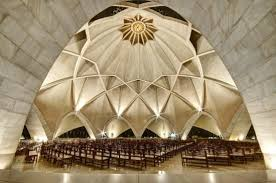
The Lotus Temple’s inclusive ideology is what sets it apart. It represents the Bahá’í idea of humanity’s unity and oneness and is accessible to people from all origins, castes, and religions. Through one of nine doorways, guests enter a tranquil central hall that can hold 2,500 people. There, they are welcome to worship, contemplate, or just take in the lovely ambience in total quiet.
The temple, which is surrounded by nine serene lakes and beautifully designed gardens covering 26 acres, creates a peaceful haven in the middle of Delhi’s bustling metropolis. Without the need for mechanical equipment, the creative architectural design uses natural lighting and ventilation to maintain a comfortable temperature all year round.
The tourist center provides interesting information about the architectural significance of the temple and Bahá’í beliefs. The Lotus Temple offers a life-changing experience that cuts across denominational borders, whether you’re looking for architectural inspiration or spiritual comfort.
Free admission Note: The prayer hall is a place of silence.
6. Chandni Chowk – Old Delhi’s Beating Heart
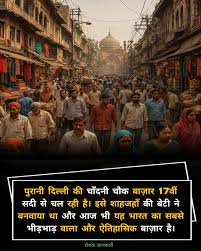
Enter Chandni Chowk, a historic bazaar in Old Delhi that was constructed in the 17th century by the Mughal princess Jahanara Begum, and travel back in time to experience a best place in Delhi. With its small passageways crammed with stores, street vendors, rickshaws, and people, this maze-like bazaar embodies the essence of Old Delhi and offers a sensory overload of sights, sounds, and scents.
Chandni Chowk is well-known for its wholesale marketplaces that specialize in anything from electronics, literature, and spices to traditional jewelry and bridal gowns. Every alley has a specialty: Katra Neel sells textiles and sarees, Kinari Bazaar sells wedding accessories, and Dariba Kalan sells silver jewelry..
Here, foodies will experience gourmet bliss at spots like Old Famous Jalebi Wala, which has been producing India’s most renowned jalebis since 1884, while Paranthe Wali Gali offers dozens of variants of legendary filled parathas — making it a best place in Delhi for street food lovers. Don’t miss the street chaat, biryanis, and fragrant kebabs that have turned this place into a foodie’s dream come true.
The surrounding Jama Masjid, the biggest mosque in India, enhances the area’s architectural and spiritual grandeur. You can enjoy breathtaking panoramic views of Old Delhi’s chaotic beauty after scaling its minarets.
Advice: To avoid the crowds, go early in the morning. You might also like to do a heritage walk with a local guide.
7. Akshardham Temple – Modern Marvel of Traditional Art
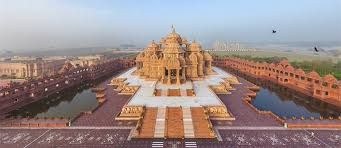
Inaugurated in 2005, the Swaminarayan Akshardham complex is a testament to contemporary India’s ability to produce architectural wonders on par with the ancients. Through amazing creativity, this magnificent pink sandstone and marble building displays 10,000 years of Indian culture, spirituality, and architecture.
Standing 141 feet tall, the main monument has nine elaborate domes, 234 well carved pillars, and more than 20,000 carved representations of gods, dancers, musicians, and plants. Each inch of stone, carved by skilled artisans utilizing age-old methods handed down through the ancestors, tells a tale..
Beyond the temple, the complex has a number of attractions: the Garden of India features bronze statues of Indian patriots and freedom fighters; the Sanskruti Vihar boat ride transports visitors through 10,000 years of Indian history; and the Yagnapurush Kund has the largest stepwell in the world with a breathtaking water show.
The “Sahaj Anand Water Show,” an evening musical fountain performance, uses fire, light, sound, and water to tell the story of life’s endless cycle. Even if taking pictures inside the complex is prohibited, seeing this amazing display of Indian heritage leaves a lasting impression.
Mondays are closed. Admission to the temple is free, however tickets are required for exhibitions.
8. Lodhi Gardens – History Meets Nature
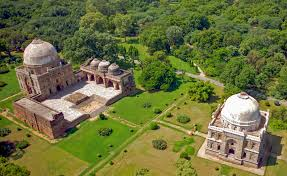
Spread over 90 acres of lush vegetation in the center of the city, Lodhi Gardens presents Delhi’s most captivating blend of natural beauty and ancient monuments, making it a best place in Delhi to relax and explore. Magnificent 15th-century tombs from the Sayyid and Lodhi dynasty periods can be seen in this urban park, which offers a distinctive fusion of medieval architecture and contemporary landscaping.
Among the architectural gems in the gardens are the enigmatic Sheesh Gumbad (Glass Dome), Mohammed Shah’s Tomb with its unusual octagonal design, and Sikander Lodhi’s Tomb, which displays early Mughal architecture. Encircled by well-kept lawns, colorful rose gardens, and old trees, these monuments serve as silent reminders of Delhi’s medieval history.
Delhi’s most popular recreational area is Lodhi Gardens, which is frequented by morning walkers, yoga practitioners, photographers, and picnickers. Each of the well-kept pathways offers a varied view as it winds through several parts. Bird watchers and wildlife photographers love the tranquil lake because it draws a variety of bird species.
The gardens offer a tranquil haven where you may read a book among old trees, meditate, or just take in the lovely surroundings while escaping the bustle of the city. It’s the perfect place to see how Delhi skillfully combines history with contemporary city living.
Free admission The best time to go for walks and take pictures is in the early morning.
9. Rashtrapati Bhavan and Parliament House
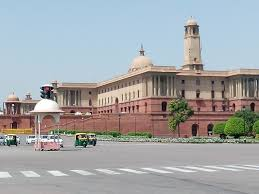
One of the biggest residential complexes for a head of state in the world is Rashtrapati Bhavan, the official house of the President of India. With 340 rooms across 200,000 square feet, this spectacular structure, designed by British architect Edwin Lutyens and finished in 1929, blends Western and Indian architectural elements — making it a best place in Delhi to admire heritage and architecture.
Open to the public during certain months, the Mughal Gardens (now known as Amrit Udyan) include breathtaking displays of roses, tulips, and seasonal flowers arranged in geometric designs influenced by Mughal garden style. The lovely herbal garden and the musical fountain show enhance the gardens’ allure.
Nearby, the circular Parliament House (Sansad Bhavan) represents the seat of Indian democracy. Its massive colonnade of 144 columns creates an impressive structure where India’s parliamentary democracy functions. The new Parliament building, inaugurated in 2023, stands as a testament to modern Indian architecture.
The entire Central Vista, which includes the ceremonial Kartavya Path boulevard, is a striking exhibition of colonial and modern Indian architecture that represents the country’s democratic ideals and system of government — making it one of the best place in Delhi to explore.
Note: Reservations are needed in advance for trips to Rashtrapati Bhavan.
10. Hauz Khas Village – Where Heritage Meets Hip
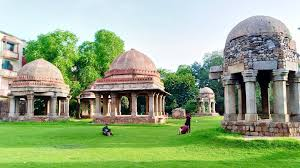
Hauz Khas Village, which blends modern life with 13th-century ruins, provides an intriguing alternative to Delhi’s conventional tourist destinations. Surrounded by a stunning deer park, the historic Hauz Khas Complex includes the tomb of Firoz Shah Tughlaq, historical madrasas (Islamic schools), and a medieval water reservoir constructed by Alauddin Khilji.
With its eclectic cafes, art galleries, boutique shops, rooftop eateries, and nightlife venues, the nearby Hauz Khas Village has become Delhi’s hippest district. This distinctive arrangement of historic buildings and contemporary businesses produces a setting that is unmatched in Delhi..
Fashionistas adore perusing the village’s businesses that sell handmade accessories, antique apparel, and brand items. The many galleries that display modern Indian art are appreciated by art enthusiasts. The varied culinary scene, which includes both worldwide fusion restaurants with breathtaking views of the historic monuments and authentic Indian cuisine, appeals to foodies.
The area comes alive during evenings when young Delhi gathers to socialize, making it perfect for experiencing the city’s contemporary culture while being surrounded by centuries of history. The deer park provides a peaceful escape where you can enjoy nature while exploring ancient ruins.
Planning Your Delhi Adventure

The best months to visit are October through March, when the weather is nice and perfect for touring. Steer clear of the monsoon season (July–September) and the sweltering summer months (April–June).
The Delhi Metro connects the majority of the city’s main attractions and is economical and effective when exploring the best place in Delhi. Flexible transit alternatives are provided by app-based taxis and autorickshaws.
Cultural Etiquette: Always ask permission before taking pictures of people, wear modest clothing when visiting places of worship, and take off shoes when necessary.
Safety advice includes choosing crowded food vendors, staying hydrated, using bottled water, and being wary of touts near tourist destinations.
Duration: Set aside at least four to five days to really visit Delhi’s main sights and take in the lively culture and food of the city. read more.